
Box breathing, or square breathing, is a powerful yet simple breathing technique designed to promote relaxation and reduce stress. It is practiced by athletes, military personnel, and everyday people alike. It involves a rhythm of inhaling, holding, exhaling, and holding again. By regulating the nervous system, box breathing helps calm the mind, reduce anxiety, and improve focus.
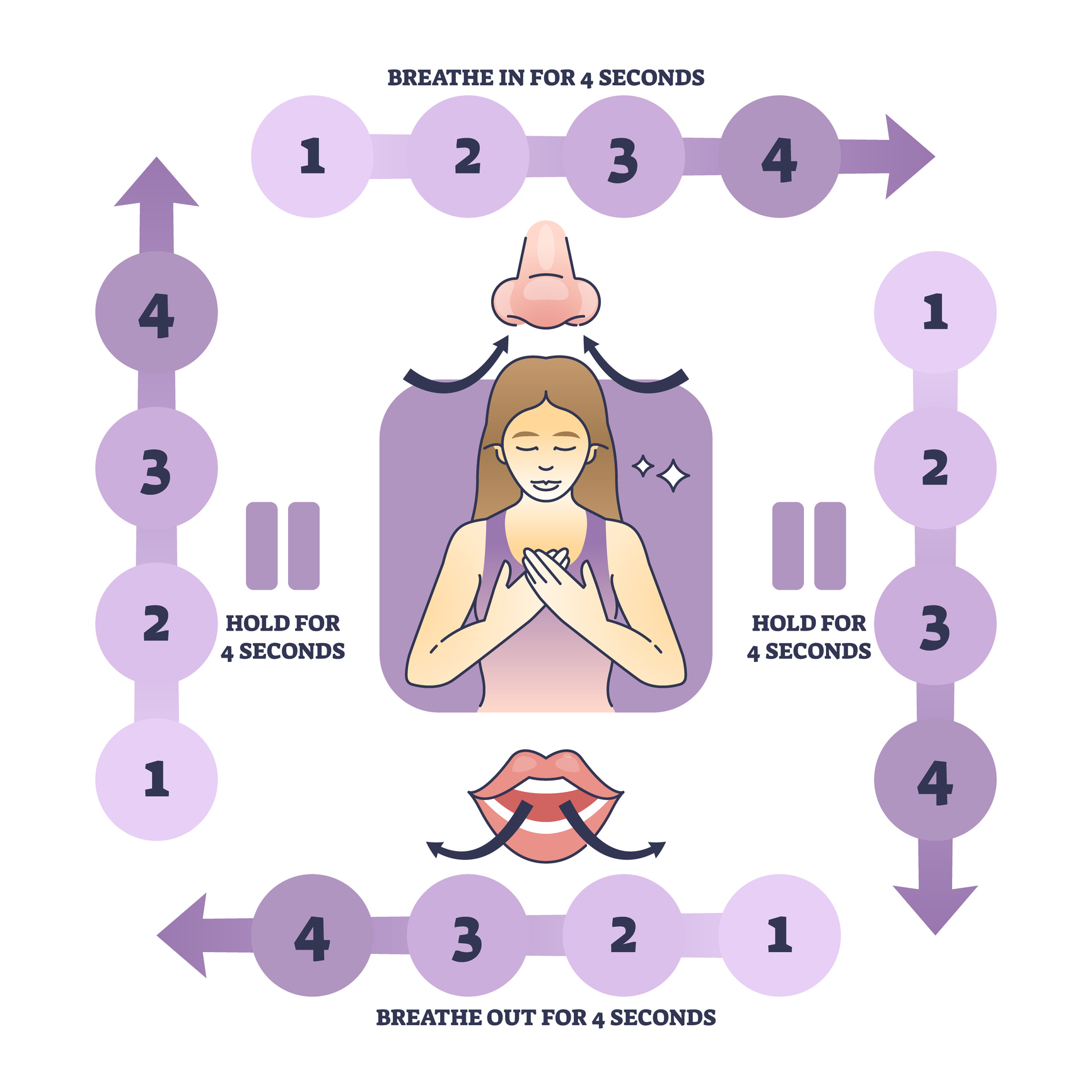
Box breathing follows a four-part cycle, each lasting the same time. The four steps are:
This is considered one “box” or cycle. The pattern is typically repeated for several minutes until you feel relaxed and centered. Those in high-pressure professions, such as Navy SEALs, often use this technique to maintain calm and control in stressful situations.
Box breathing directly affects the autonomic nervous system, which controls involuntary actions such as heart rate and digestion. By slowing and holding your breath, you activate the parasympathetic nervous system—the “rest and digest” response—which counteracts the body’s stress response (fight or flight). Regular practice of box breathing can lead to:
To practice box breathing, follow these steps:
You can start with a few minutes daily and gradually extend the practice as you become more comfortable. Whether you’re looking to manage stress at work, prepare for a challenging task, or unwind, box breathing is an effective and accessible tool for anyone.
If you have any medical conditions that affect your ability to hold your breath, such as respiratory issues or anxiety disorders, consult with a healthcare professional before trying box breathing. You can modify the practice by shortening or eliminating the breath-holding time and focusing more on slow, rhythmic inhalations and exhalations instead.
Choosing the right health and well-being coaching program is a deeply personal decision—especially when it’s tied to one’s journey of healing and growth. As a cancer survivor and now a health and wellness coach supporting cancer patients, Ed Jones wanted the best training to serve his clients with expertise and ...
READ MOREIn the rush of deadlines and meetings, kindness can often be overlooked. However, research shows that workplace kindness is crucial for employee well-being. Regular acts of kindness enhance morale, reduce stress, and foster collaboration and productivity. Here are five ways kindness can improve well-being at work.

Art can support healthcare providers by boosting their skills and emotional awareness. Engaging in art enhances observation and empathy, key qualities for patient care. Here are three ways making art fosters a more compassionate approach to healing.


